By Stephanie Johnson, LMFT
The holidays are a time when complicated family dynamics and unresolved emotional wounds can resurface, making boundary-setting especially challenging. If you find yourself dreading family gatherings or people-pleasing at the expense of your own needs, you’re not alone.
In this article, you’ll learn:
Why childhood patterns make boundaries so hard with family
How to communicate your needs clearly and calmly
Scripts for setting kind but firm holiday boundaries
Self-care practices to help you stay grounded
When to seek professional support for boundary issues
The Bottom Line: Setting boundaries with family is hard due to fears of rejection, guilt, and childhood patterns. To set healthy holiday boundaries, communicate clearly, prepare for pushback, and offer alternatives. Enforce consequences calmly. Seek therapy if boundaries consistently fail. Remember: boundaries are self-care, not selfishness.
Let’s explore why boundaries feel so difficult with family and how you can confidently define and hold yours this holiday season.
Why Are Boundaries So Difficult With Family?
In my 9 years as a Licensed Marriage and Family Therapist, I’ve seen firsthand how boundaries honor your needs, limits, and personal autonomy. So why do we struggle to set them with the people closest to us?
For many of us, boundary issues start in childhood. If your early experiences taught you that setting boundaries led to a loss of love or safety, your nervous system may still react to limit-setting as a threat. I often see this with clients who grew up in households where saying “no” wasn’t allowed, or love felt conditional on people-pleasing.
How Childhood Patterns Impact Adult Boundaries
Many of my clients are surprised to realize how deeply their family-of-origin dynamics still shape their adult relationships. One woman I worked with consistently over-extended herself hosting holiday meals, even though she felt resentful and unappreciated. Through our work together, she traced this pattern back to being parentified as a child (having to step into an adult role too soon) and equating her worth with excessive caretaking.
Guilt is another common obstacle. You may worry that setting boundaries is selfish or hurtful. But in truth, clear boundaries allow for healthier, more authentic relationships. You matter, and you deserve to be treated like you matter.
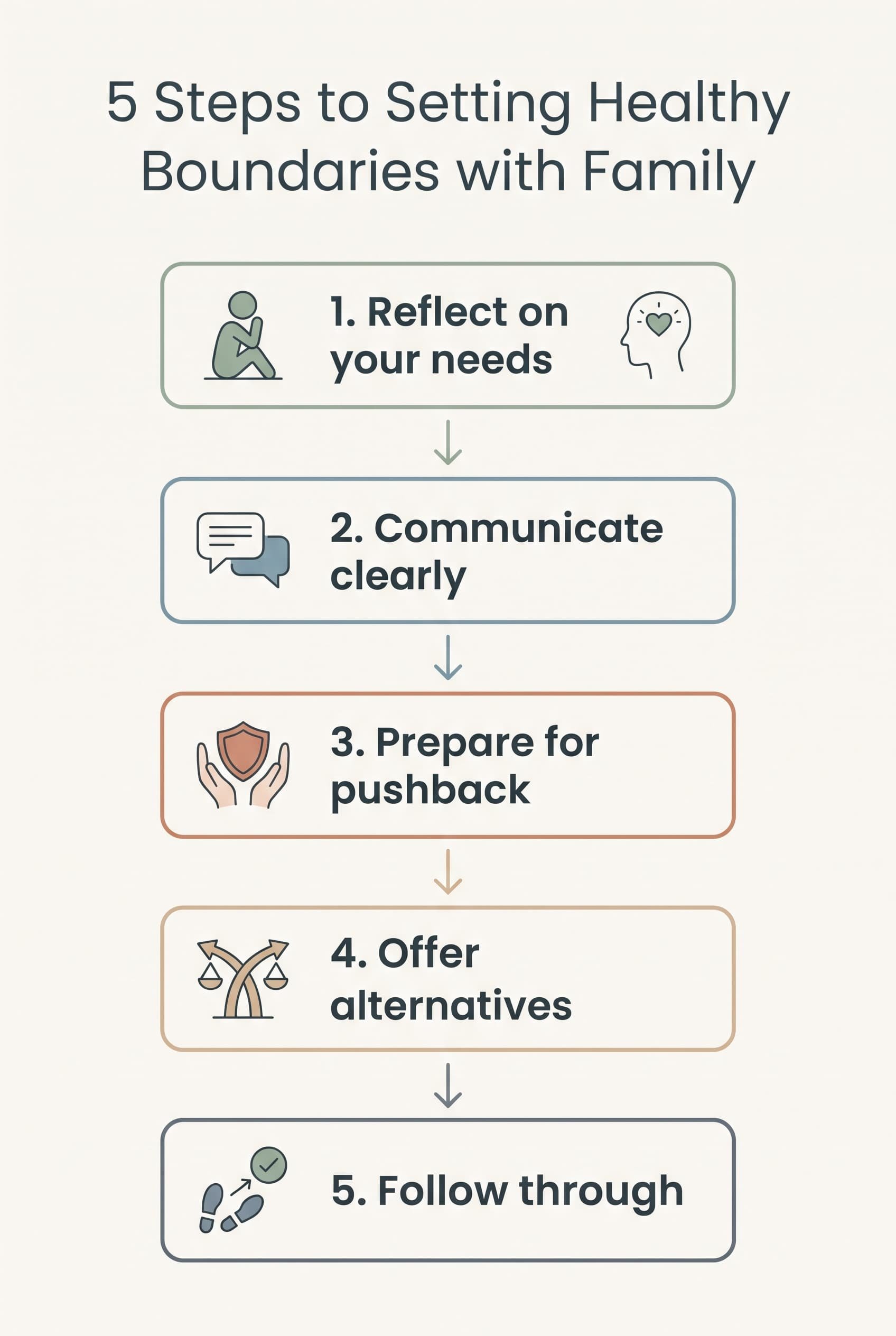
How to Set Healthy Boundaries With Family
While these patterns run deep, change is possible. Start here:
Reflect on your needs and limits. What fills you up and what drains you? Where do you need more space?
Communicate clearly and directly. Use “I” statements to express your needs without blame. “I won’t be able to host this year, but I’d love to bring a dish.”
Prepare for pushback. Family members may bristle at your boundaries at first. That’s okay. Stay calm and repeat your position without over-explaining.
Offer alternatives when you can. Suggest other ways to connect that work for you. “I can’t do dinner, but let’s plan a holiday hike together.”
Follow through. Boundaries are meaningless without enforcement. If a line gets crossed, calmly leave the situation or end the conversation.
Boundary Script Examples to Try
“I need to go lie down for a bit. Let’s catch up more later.”
“I won’t be discussing my divorce at family gatherings. I’m happy to talk about other things.”
“We won’t be able to stay the full week, but we’re excited to see you for a few days.”
“I love you, but I don’t feel right lending money.”
Get more scripts and tips in my free boundary-setting worksheet.
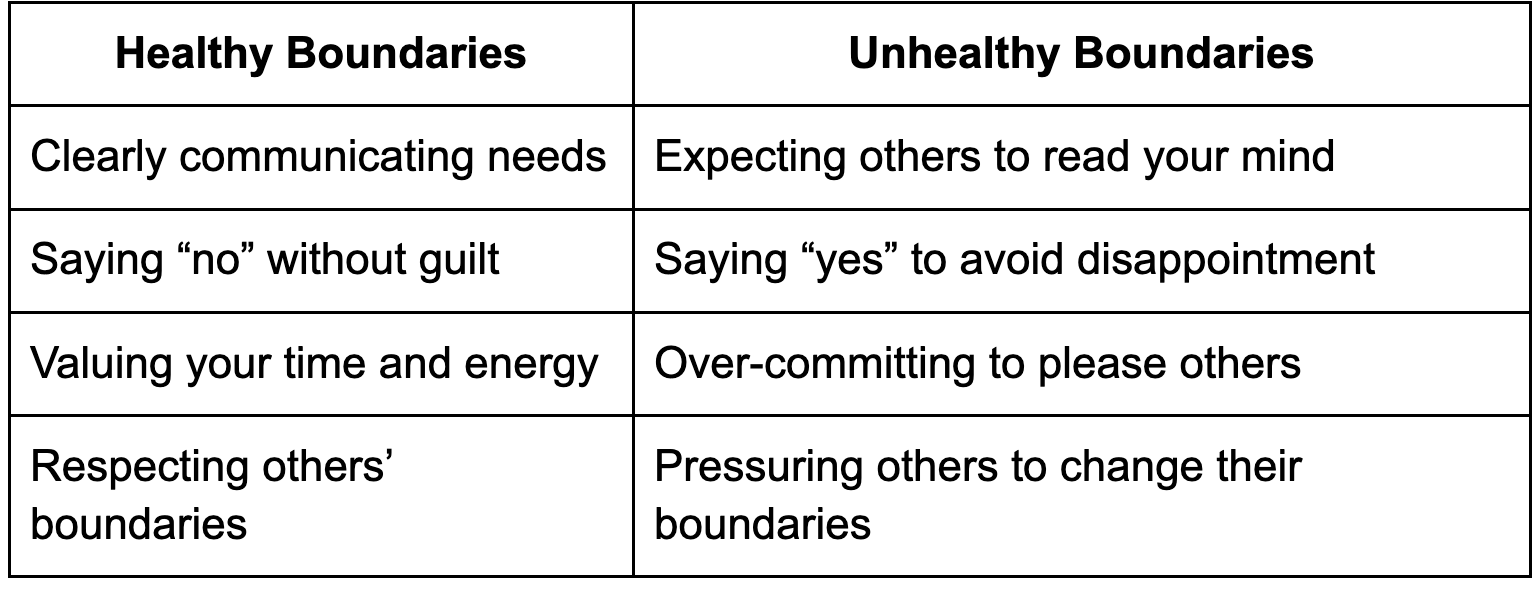
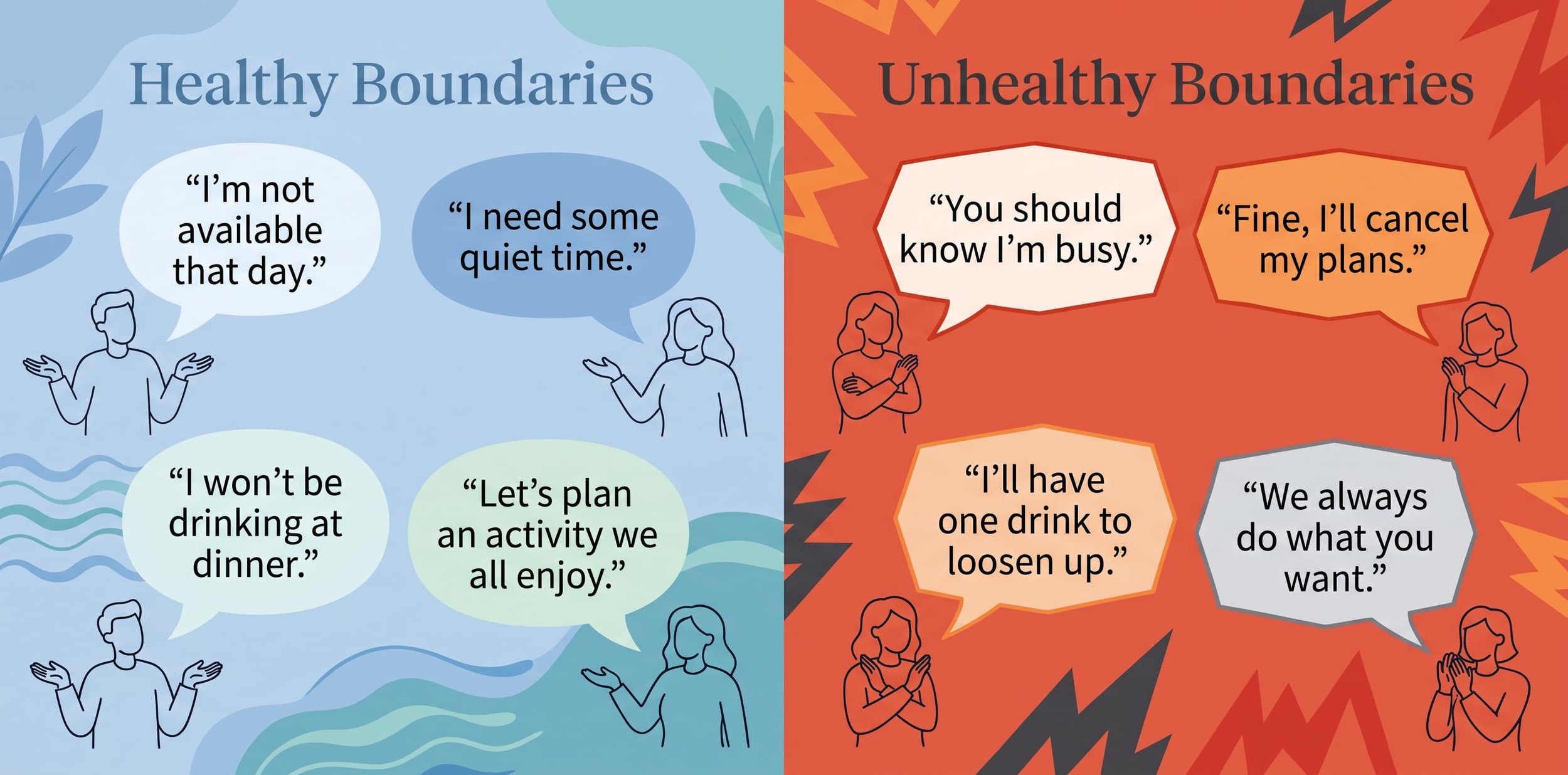
Spotting the Difference: Healthy vs Unhealthy Boundaries
Self-Care Practices for Holding Boundaries During the Holidays
Upholding boundaries with family can bring up tough emotions. Prioritize your wellbeing with these self-care practices:
Take alone-time breaks to decompress. Walk around the block or find a quiet place to breathe deeply.
Practice self-compassion - remind yourself that you’re doing your best and your needs matter.
Lean on your support system. Text a friend who gets it or attend a support group.
As a therapist trained in Brainspotting, I help my clients notice how boundary violations can get trapped in the body. If your nervous system feels activated during family time, try this simple grounding exercise: place one hand on your heart and one on your belly. Breathe slowly and feel your body settle.
When to Seek Professional Help for Boundary Issues
If you’re struggling to set boundaries, feeling guilty or anxious around family dynamics, or seeing the same unhealthy patterns play out year after year, it might be time to seek professional support.
In my Englewood therapy practice, I offer a warm, judgment-free space for individuals to work through unresolved family wounds, learn healthy communication skills, and strengthen their sense of self-worth. If you’d like to explore how therapy for boundary-setting can help you reclaim your agency and build more fulfilling relationships, I invite you to book a free 15-minute consult.
Remember, boundaries aren’t selfish - they’re a powerful act of self-care. You deserve to protect your peace and energy this holiday season (and always). It’s not easy, but with practice, you can learn to honor your needs while still connecting with those you love.
Wishing you a holiday season of warmth, joy, and authentic connection.
FAQ:
How do I deal with guilt when setting boundaries?
What if my family won’t respect my boundaries?
How do I know if I need professional help for boundary issues?
About the Author:
Stephanie Johnson is a Licensed Marriage and Family Therapist with 9 years of experience helping individuals set healthy boundaries and reclaim their sense of self. She specializes in trauma-informed therapy and is trained in Brainspotting and EFIT. Stephanie is passionate about empowering her clients to prioritize their own needs and build authentic, fulfilling relationships. Read Stephanie’s full bio here.
The information in this article is for educational and informational purposes only. It is not intended to be a substitute for professional medical advice, diagnosis, or treatment. Always seek the guidance of your doctor or other qualified health professional with any questions you may have regarding your health or a medical condition. Never disregard the advice of a medical professional or delay in seeking it because of something you have read in this article. If you think you may have a medical emergency, call your doctor, go to the emergency department, or call 911 immediately.
If you or someone you love is struggling or in crisis, help is available right now. You are not alone.
988 Suicide & Crisis Lifeline — call or text 988
Crisis Text Line — text HOME to 741741
Emergency Services — call 911