Written by Stephanie Johnson, LMFT (License #MFT.2080)
You have probably spent weeks turning this over in your head.
You open a new browser tab, type "anxiety therapist near me," look at the long list of names in Englewood, and your stomach drops. Then come the questions: What do I even say first? What if I start crying and can't stop? What if they ask about something I want to keep to myself?
When your nervous system is already red-lined, taking the first step to get support feels like running a marathon uphill.
Key Takeaways: Starting Anxiety Therapy at Anchor Point Counseling
Zero Performance Required: You do not need an agenda, a bulleted list of symptoms, or clear goals. Showing up worn out is plenty.
A Clear 50-Minute Structure: We divide the time into three simple parts: settling in (minutes 0–10), talking through what hurts without rushing (minutes 10–35), and physical grounding with clear next steps (minutes 35–50).
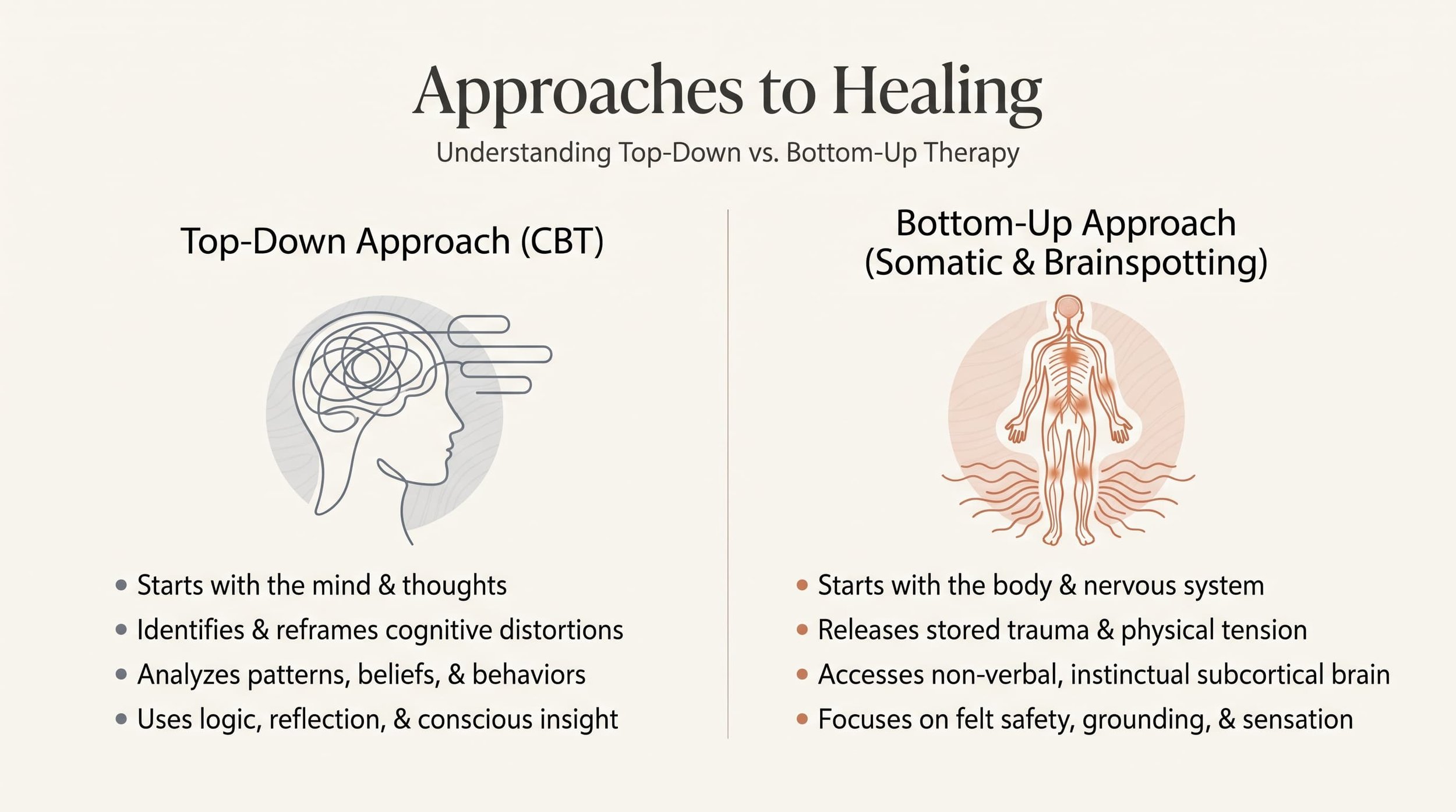
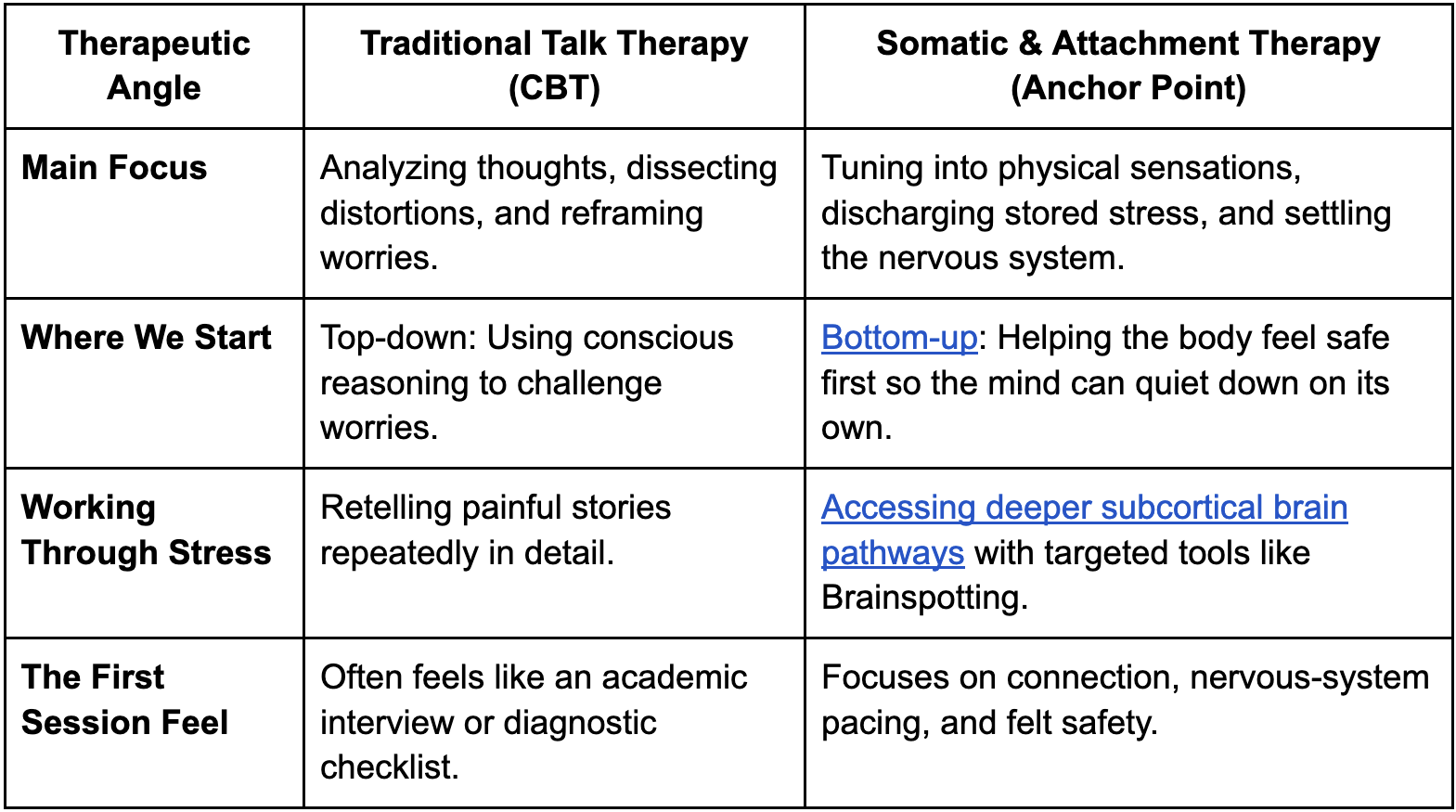
Bottom-Up Somatic Work: Unlike traditional talk therapy that only analyzes your thoughts, we bring in nervous-system modalities like Brainspotting to help quiet physical fight-or-flight loops.
Support After the Session: Leaving with a "vulnerability hangover" is completely normal. We give you practical pacing tools to help you ease back into the rest of your day.
The "Zero-Performance" Intake: Day One Without the Pressure
If you spend your days managing workloads, pleasing other people, or keeping life together for everyone around you, therapy can feel like another test you have to ace.
You might catch yourself wanting to organize your symptoms chronologically, outline your talking points, or wrap your struggles into neat, tidy packages.
Here is the truth: Therapy is the one room where you never have to perform.
In my Englewood office, women often apologize within our first five minutes together. They apologize for crying, for jumping from one story to an unrelated memory, or for sounding scattered.
You do not have to have your act together to sit on this couch.
Why You Don't Need Your Goals Figured Out Yet
Most people worry they will sit down, hear "How can I help you?" and freeze.
That blank-slate feeling makes complete physiological sense. Prolonged anxiety hijacks your prefrontal cortex, the part of the brain in charge of logic and organization. Expecting yourself to build a coherent treatment plan while your nervous system is sounding five fire alarms at once is unfair.
You don't need a polished roadmap. Walking in and saying, "I am exhausted, my chest won't stop aching, and my brain will not shut off," is a complete sentence. It gives us everything we need to start.
The 50-Minute First Session: What the Hour Actually Looks Like
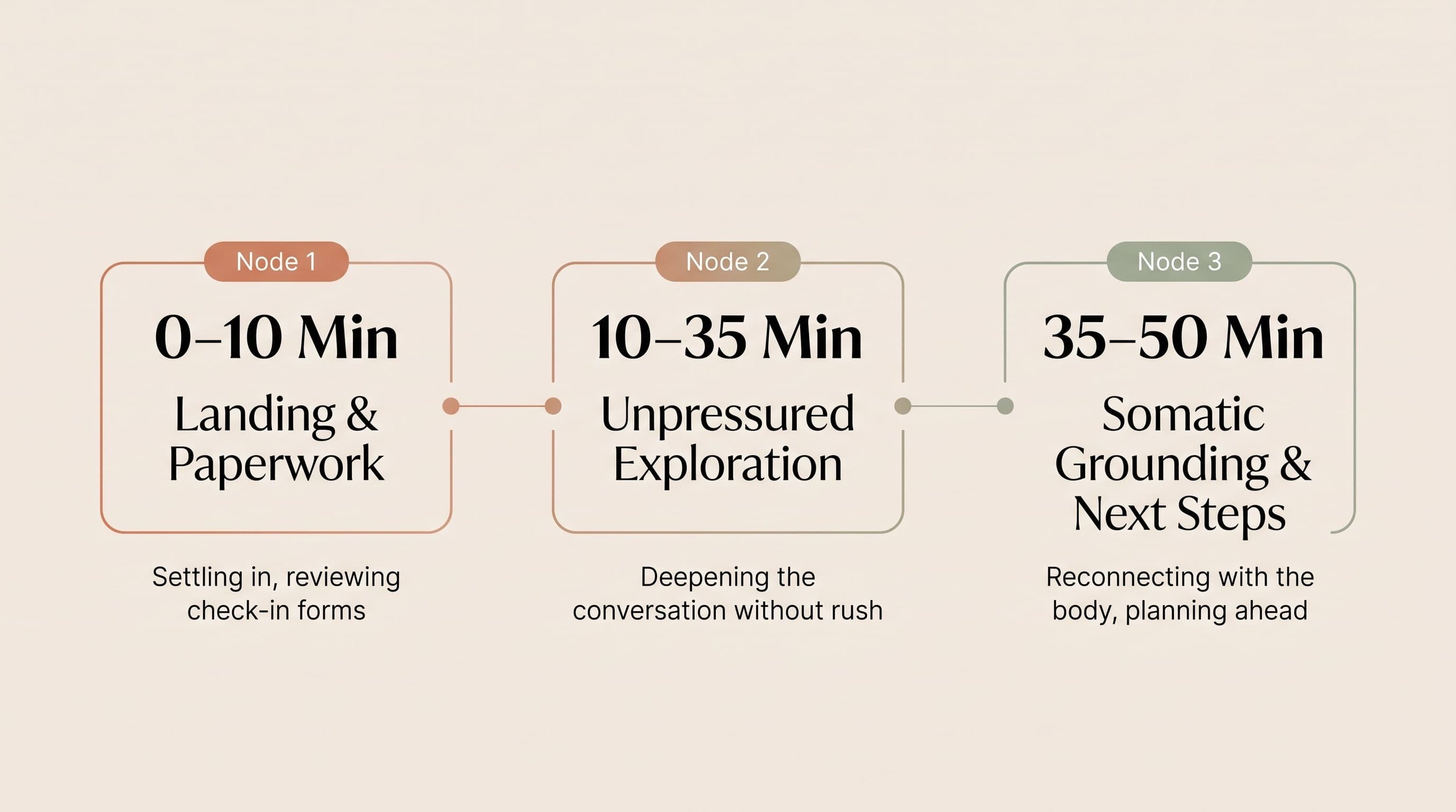
Knowing how the hour unfolds takes the sting out of the unknown.
Here is the exact rhythm of an initial 50-minute appointment at Anchor Point Counseling:
Phase 1 (Minutes 0–10): Arriving, the Room, and Catching Your Breath
Whether we meet in person at our office off Kimmer Drive in Lone Tree or online across Colorado, these first ten minutes belong to your nervous system:
Simple Arrival: Our Englewood office has easy, private parking right outside. You won't have to navigate a maze of parking garages or fight downtown traffic before you walk through the door. If you are joining via telehealth, you can curl up on your own couch with a hot mug of tea.
Clear Paperwork: We take a quick look at standard consent forms and client confidentiality rules so you know exactly how your privacy is protected by law.
Letting Your Body Land: We do not jump into heavy emotional territory the second you sit down. We take a breath, let the room go quiet for a second, and give your body time to realize it is safe.
Phase 2 (Minutes 10–35): Unpacking What Brought You In
This block is where we look at what nudged you to reach out. There is no interrogation here. We move at your pace:
The "Why Now?" Conversation: We look gently at what tipped the scales recently. Has late-night overthinking ruined your sleep? Have sudden panic attacks started interrupting your workday? Are you tired of saying "yes" to everyone else while you run on fumes?
Spotting Physical Stress Signals: We track where worry lives in your body, whether that is a tight throat, clenched teeth, or shallow breathing.
Respecting Your Boundaries: You hold the wheel. If a memory or topic feels too raw, we mark it as something important and leave it alone for another day. We never force open doors you aren't ready to walk through.
(If you want to get a feel for how I work before booking a full session, you can start with a complimentary 15-minute phone consultation to ask questions and talk through what you're feeling.)
Phase 3 (Minutes 35–50): Grounding and Clear Next Steps
Therapy should never leave you stranded in the parking lot feeling raw or emotionally cracked open. The last fifteen minutes bring you back down to earth:
Real-Time Somatic Grounding: Before you step out the door, I walk you through a physical regulation tool (like an orienting exercise or a rhythmic breath pattern) to help settle your nervous system.
Checking Fit: Good therapy requires the right relational chemistry. We talk honestly about how the conversation felt for you, address any hesitations, and decide together if my clinical style fits your goals.
Scheduling Without Pressure: If we both feel good about working together, we map out a realistic schedule (weekly or every other week) that fits your life and budget.
Real Experiences from Local Clients
"For the first time in years, I feel like me. Therapy with Stephanie helped me find my voice and genuine peace."
Client, Englewood, CO
Over the past 7+ years, hundreds of women across Englewood and the Denver South Metro area have walked into this room carrying the weight of the world and left feeling grounded and understood.
Claim Your Free 15-Minute Consultation: Take the Pressure Off
Talk Therapy vs. Somatic Therapy: How This Differs from What You've Tried
A lot of women who reach out to me have already spent years in traditional talk therapy.
They understand their cognitive distortions. They can name their triggers. Yet, despite all that insight, their bodies are still stuck in high alert.
In my clinical work with women in Englewood, I see this daily: you cannot think your way out of an alarm state that lives in your body. Anxiety is not just a thought loop. It is an autonomic survival response.
Reference Links:
Accessing deeper subcortical brain pathways
Why Clinical Checklists Can Overwhelm You
Filling out clinical inventories when you are already in a state of quiet panic feels cold and clinical.
At Anchor Point Counseling, my advanced training in Emotionally Focused Individual Therapy (EFIT) and Brainspotting shapes every interaction.
Instead of treating you like a walking diagnosis, we pay attention to what your nervous system does in real time. As your body learns that it is out of danger, the mental chatter and hyper-vigilance start dropping away naturally.
What Happens After Minute 50: The "Vulnerability Hangover"
Most therapy articles pretend that once the session timer dings, you jump back into your car and conquer your workday.
Feeling drained or tender after your first session is a normal physical response to letting your guard down.
Opening up takes serious physical and emotional energy. Afterward, you might run into what therapists call a "vulnerability hangover." You might feel sleepy, teary, or catch yourself overthinking what you shared.
That reaction is not a setback. It just means your body is adjusting to what it feels like to set down a heavy load.
A Practical 3-Step Routine for the Drive Home
Here is how to take care of yourself right after your session:
Protect a 10-Minute Buffer: Do not schedule a high-stakes meeting or a family call ten minutes after your appointment. Sit in your car, take a quiet turn around Kimmer Drive, or listen to familiar music while your mind resets.
Hydrate and Eat Something Real: Processing emotional tension burns physical fuel. Drink plenty of water, eat a snack with protein, and drop your shoulders away from your ears.
Keep Your Boundaries Simple: If friends or partners ask how it went, you don't have to give a play-by-play. Try this script: "It was good, but I'm a little quiet right now and just taking some time to decompress."
Frequently Asked Questions About Starting Therapy
Starting therapy should be clear and predictable. Here are straightforward answers to common questions:
Do I have to talk about my past trauma in the first session?
No. You are never pushed to tell painful stories right out of the gate. Our initial focus is building safety, trust, and a solid working foundation at a pace that keeps your nervous system calm.
How long does an initial anxiety session last?
Sessions run for 50 minutes. That window leaves enough time to settle in, explore what is happening in your life, and ground yourself before heading back out.
Does Anchor Point Counseling accept insurance?
Anchor Point Counseling is an out-of-network practice. Working outside insurance networks protects your health privacy, avoids compulsory psychiatric labels, and gives us complete freedom to tailor your care to your goals rather than an insurance adjuster's rules. Upon request, we provide an itemized Superbill each month that you can submit to your insurance company for potential out-of-network reimbursement.
Do you offer online anxiety therapy across Colorado?
Yes. In addition to our quiet office serving Englewood, Lone Tree, Centennial, and the Denver South Metro area, I work with adult women virtually anywhere in the state of Colorado through secure, HIPAA-compliant video sessions.
Take the First Step in Englewood, CO
Living with chronic worry, people-pleasing, or silent panic is exhausting. You don't have to keep carrying everything on your own shoulders.
You don't need to fix your life before you ask for help.
Getting started is simple:
Say Hello: Fill out our short, private Contact Form. It takes under two minutes.
Talk for 15 Minutes: We jump on a quick, complimentary phone call to talk through what you are going through and make sure we are a great fit.
Start on Your Terms: We book your first 50-minute appointment at our Lone Tree office in Englewood or online from anywhere in Colorado.
Reclaim Your Peace: Schedule Your Free 15-Minute Consultation Today
About the Author
Stephanie Johnson, LMFT (License #MFT.2080) is the founder of Anchor Point Counseling in Englewood, Colorado. With over seven years of clinical experience, she works with women navigating anxiety, chronic people-pleasing, burnout, and relationship strain. Stephanie blends attachment-focused therapy with somatic approaches, including Brainspotting and Emotionally Focused Therapy (EFIT), offering compassionate, neuro-affirming care that honors each client's natural pace. Learn more about her background and approach on her About Page.
Medical Disclaimer
This article is for educational and reflective purposes only. It is not medical or psychological advice and does not establish a therapist-client relationship. If you are experiencing acute psychiatric distress or a medical crisis, please speak with a physician or reach out to a local healthcare provider.
Crisis Support
If you or someone you love is facing an immediate mental health emergency, free, confidential support is available 24/7:
988 Suicide & Crisis Lifeline: Call or text 988
Crisis Text Line: Text HOME to 741741
Colorado Crisis Services: Call 1-844-493-8255 or text TALK to 38255
Emergency Assistance: Call 911 or head to your nearest emergency room